How Drains Get Slow in a Coastal Home
Kitchen drains collect fats and oils that cool and harden inside the pipe. Bathroom drains gather hair bound together by soap. Showers near the coast often see fine sand rinsed off after a beach day, and that sand settles in traps and low spots.
When only one fixture is slow, the clog is usually close to that fixture. When several drains slow down at once, or a tub gurgles when the toilet flushes, the blockage may be further down in a shared branch or the main line, and that changes how it should be cleared.
What Drain Cleaning Involves
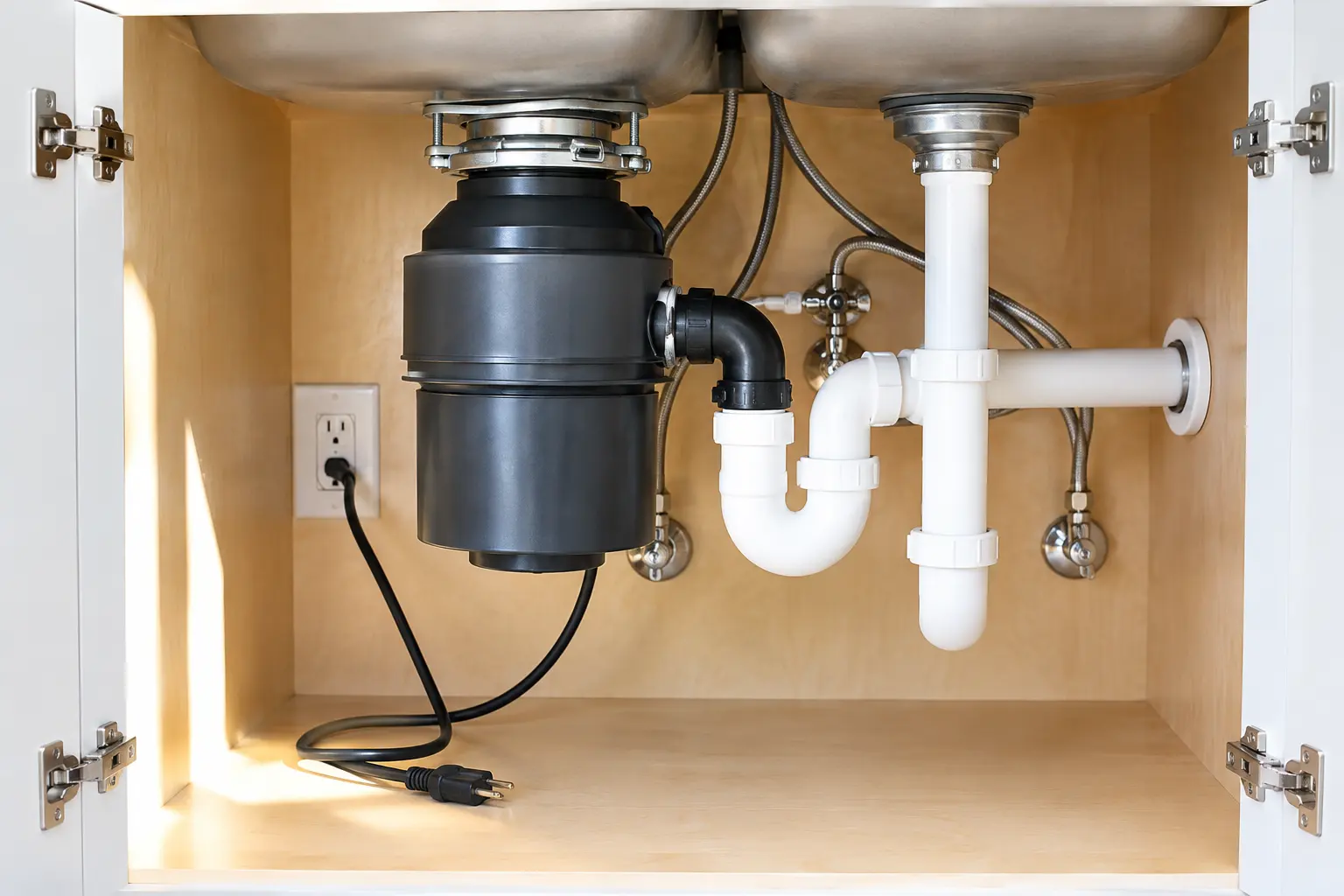
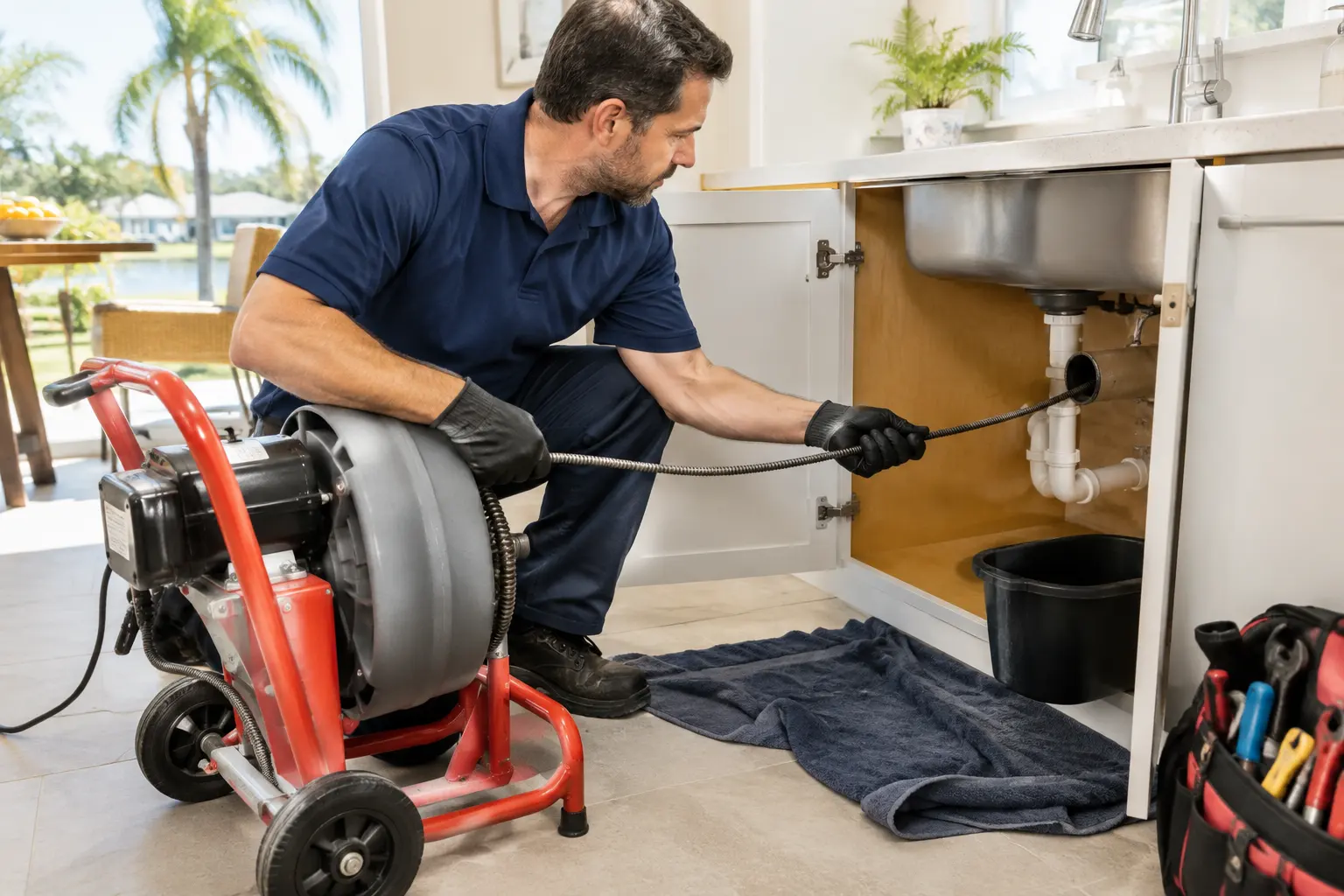
Drain cleaning usually starts at the most accessible point, such as the trap or a cleanout. Depending on the clog, a hand auger or a powered drain cable is used to break up and pull out the material. Kitchen lines with grease may need more than one pass.
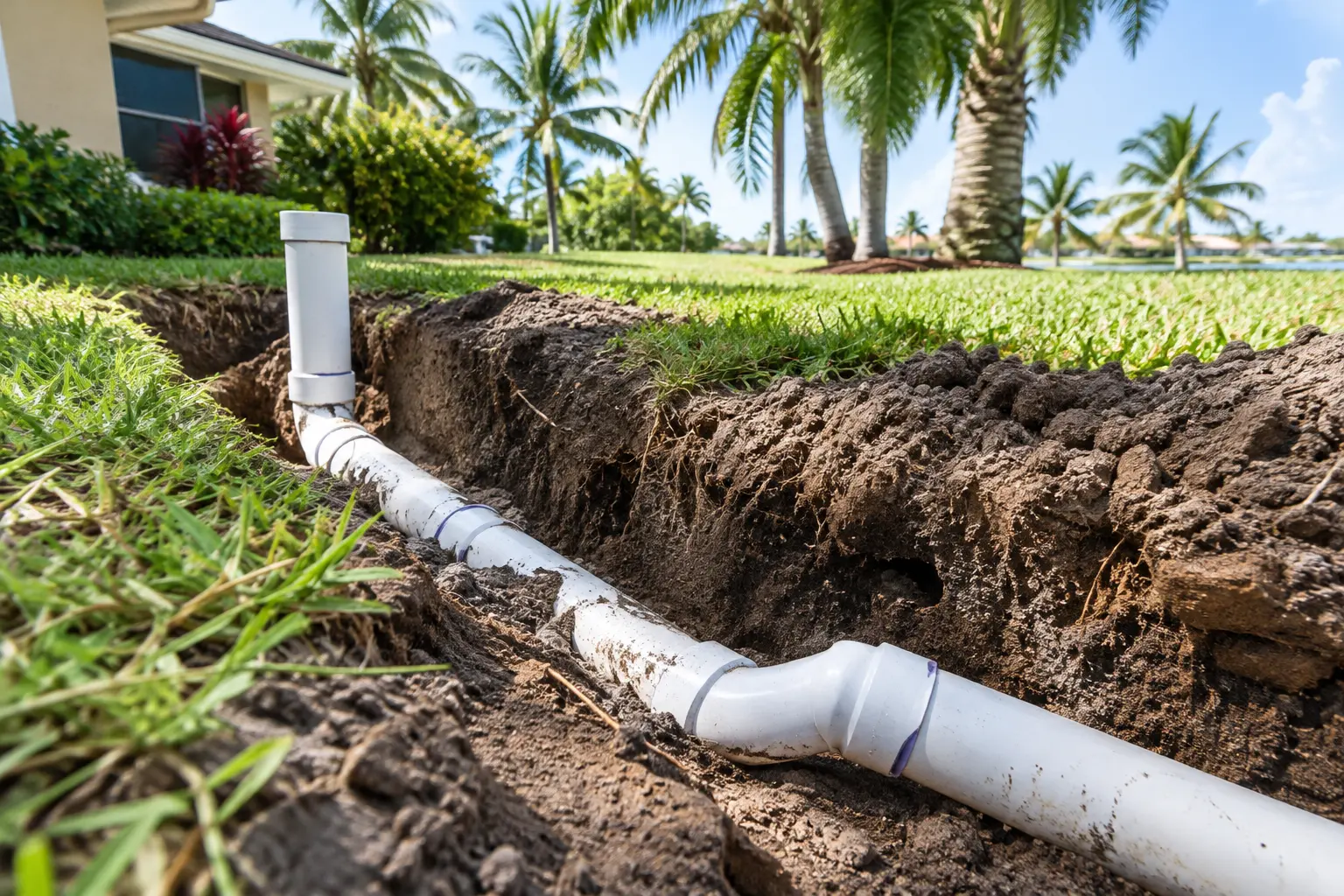
If the same drain keeps clogging, the line may have a sag, a broken section, or roots further along. In that case, a camera look or a sewer line evaluation may be the more useful next step.
How this kind of job usually unfolds
- 1
Tell us which drains
List every slow fixture, even the ones that seem minor, so the pattern is clear.
- 2
Find the access point
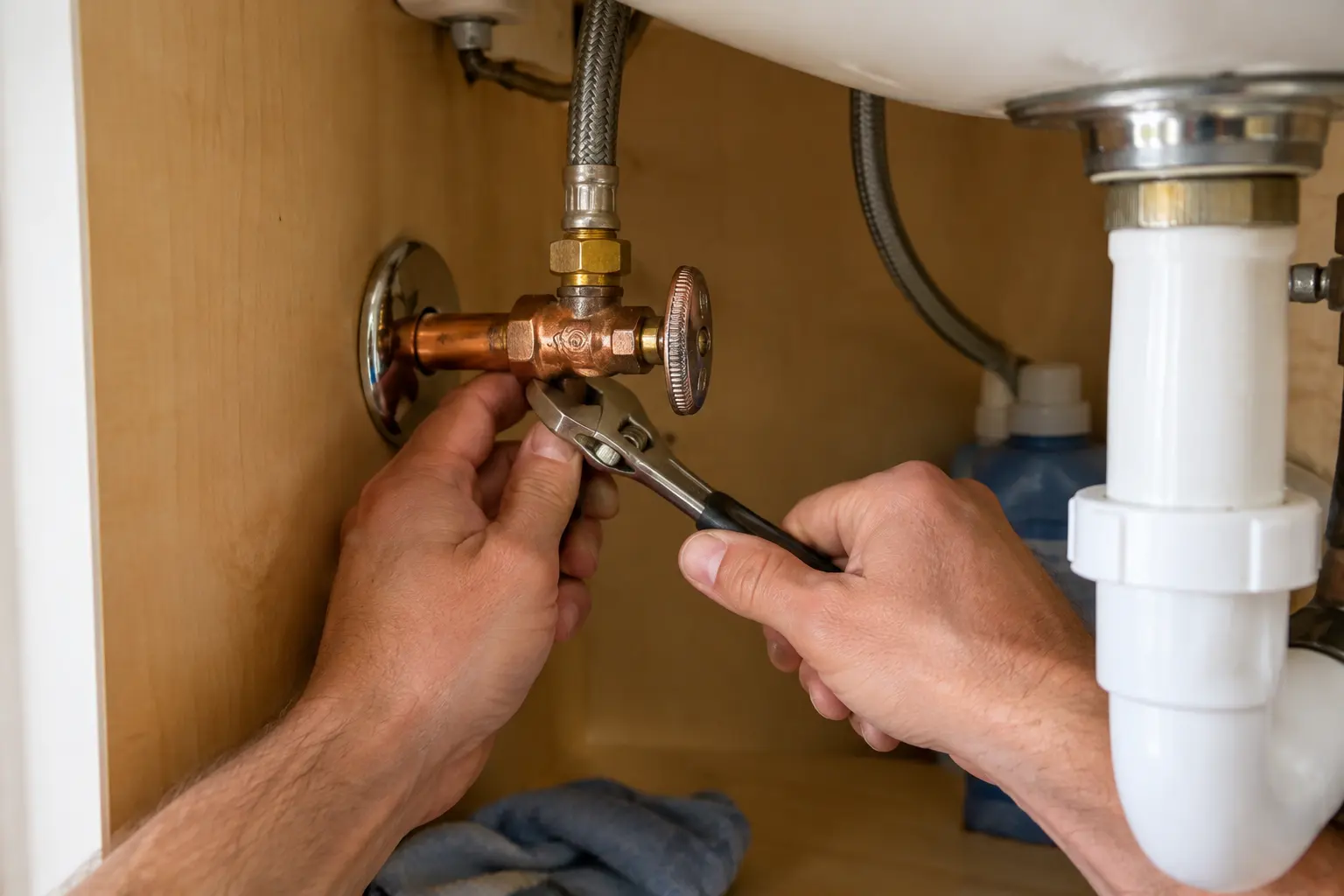
The trap, cleanout, or fixture opening that reaches the clog most directly is chosen.
- 3
Clear the line
The blockage is broken up and removed, then water is run to confirm normal flow.
- 4
Talk about prevention
Knowing what caused a clog makes it easier to keep it from returning.
Questions about drain cleaning
Are store bought drain chemicals a good idea?
They can damage older pipes and make the job harder for anyone working on the drain later. A plunger or a simple drain snake is a gentler first try.
Why does my drain smell even when it is not clogged?
A dry trap, a vent problem, or buildup on the pipe walls can cause odors. Mention the smell in your request.