When Replacement Makes More Sense Than Repair
Tank water heaters wear from the inside. Sediment builds on the bottom, the lining ages, and eventually the tank itself can rust through. When a tank is leaking from the body, repair is rarely an option, and replacement becomes the practical choice.
Replacement is also worth considering when a household changes. More people, a new soaking tub, or a home office that runs a dishwasher midday can all outgrow an older unit that once worked fine.
What Installation Covers
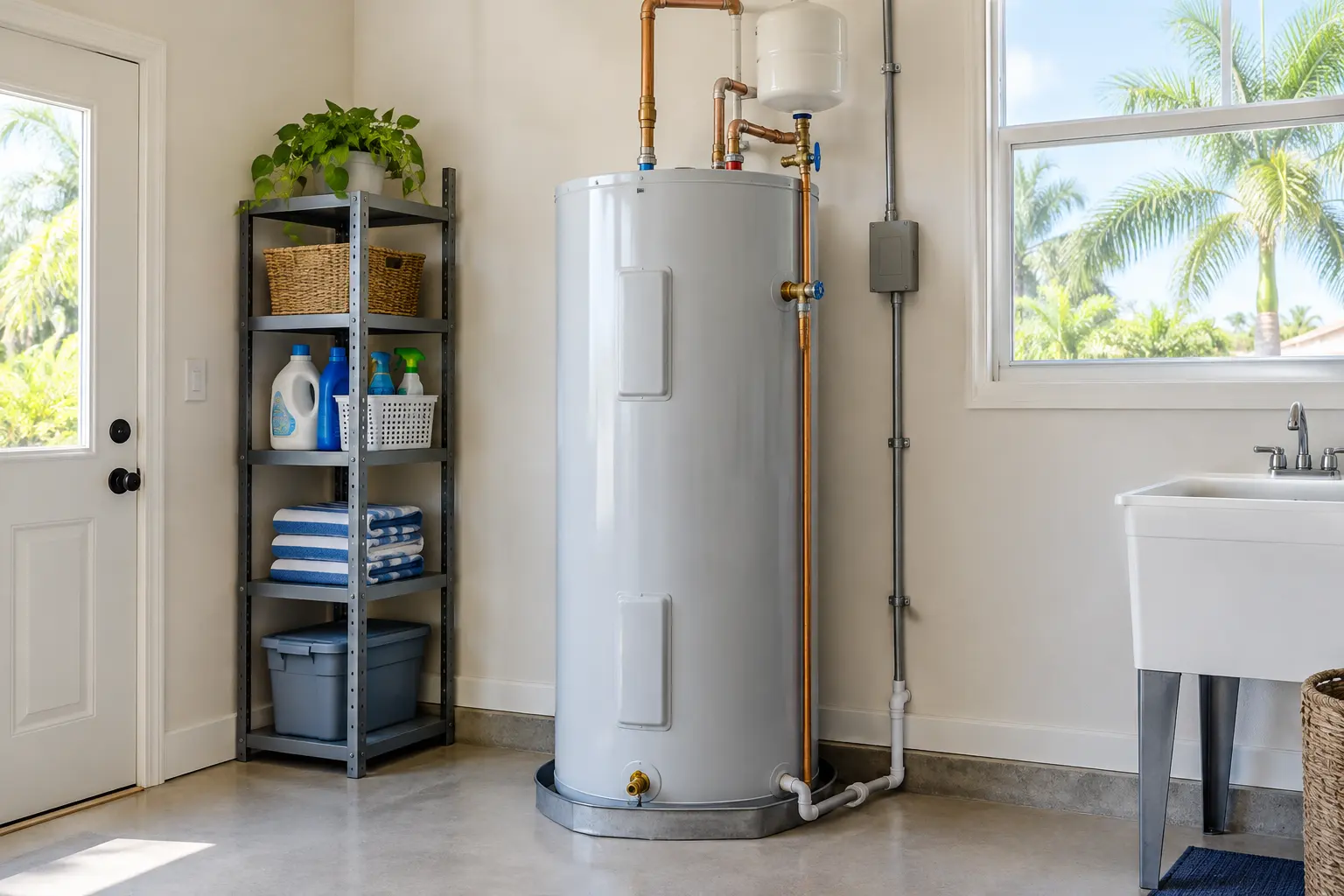
Installation planning looks at fuel type, available space, household size, and how hot water is used through the day. Tank and tankless units each have tradeoffs in upfront cost, space, and how they deliver hot water.
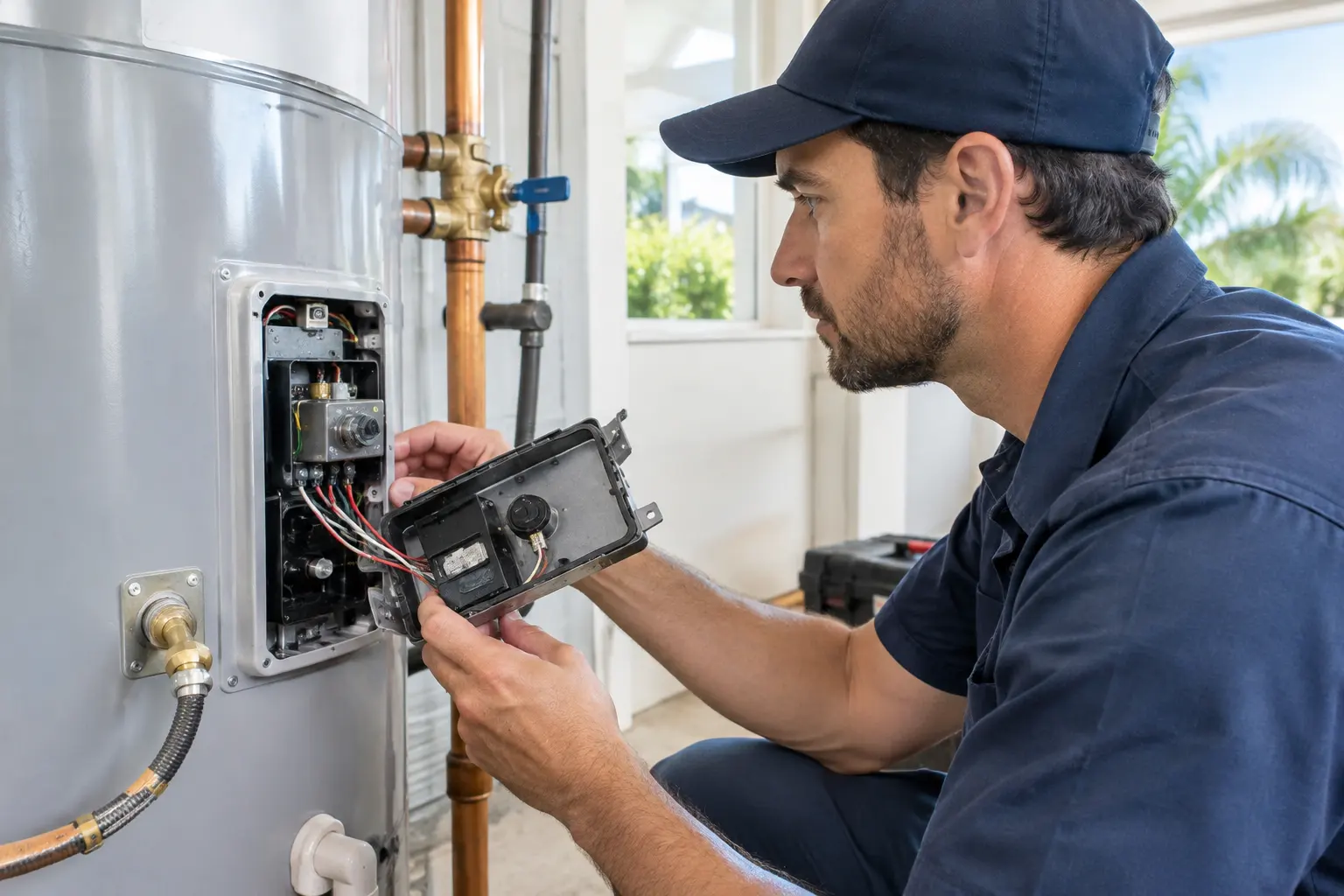
The work itself includes draining and removing the old unit, setting the new heater, connecting water and power or gas lines, installing the required relief valve piping, and filling and testing the system before it is left running.
How this kind of job usually unfolds
- 1
Share your current setup
Tell us the location, fuel type, and approximate age of your existing heater if you know it.
- 2
Pick the right unit
Size and type are matched to your household and your space.
- 3
Swap and connect
The old heater is removed and the new one is installed and connected.
- 4
Test and walk through
Temperature, relief valve, and connections are checked before regular use.
Questions about water heater installation
Is tankless always better?
Not always. Tankless units save space and heat on demand, but fit, fuel, and household habits all affect whether they are the right choice.
Can I install a bigger tank in the same spot?
Sometimes. Clearances, venting, and access all need to be checked first.