What Goes Wrong Underground
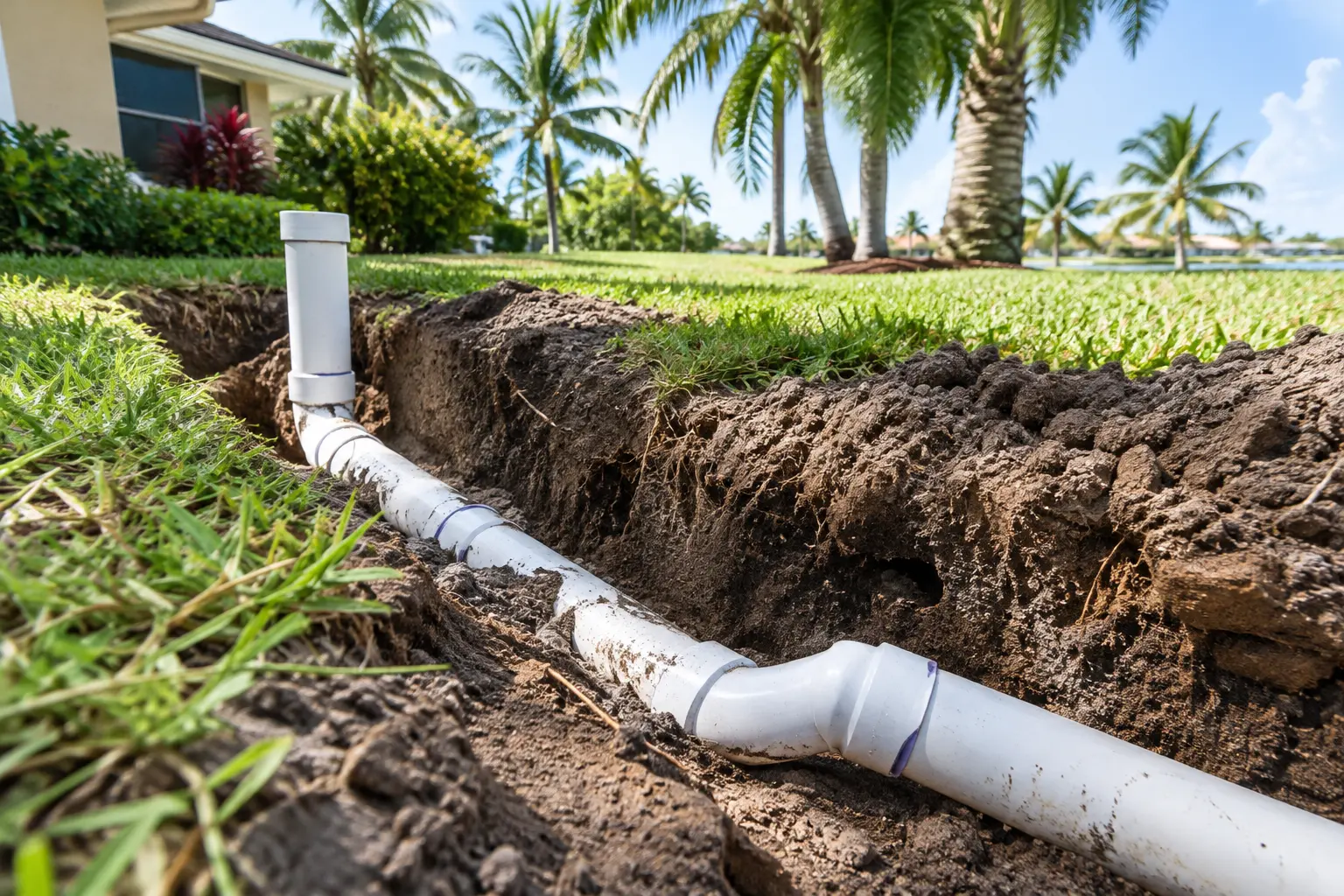
Some homes have cast iron or clay sewer pipe. Over decades, cast iron can corrode from the inside and clay joints can shift, letting roots find their way in. Sandy soil and heavy summer rains can also cause sections of pipe to settle and sag.
A sag holds water and waste, a crack lets roots in, and roots catch everything flowing past. The result is a main line that backs up repeatedly, often into the lowest fixture in the house first.
What Sewer Line Repair Can Include
Repair starts with understanding the line: where it runs, what it is made of, and where the problem sits. A camera inspection through a cleanout is the usual way to see inside without digging.
Depending on what is found, repair options can include clearing roots, replacing a damaged section, or replacing a longer run of pipe. Each option affects the yard, driveway, or landscaping differently.
How this kind of job usually unfolds
- 1
Describe the pattern
Tell us which drains back up and how often it has happened.
- 2
Look inside the line
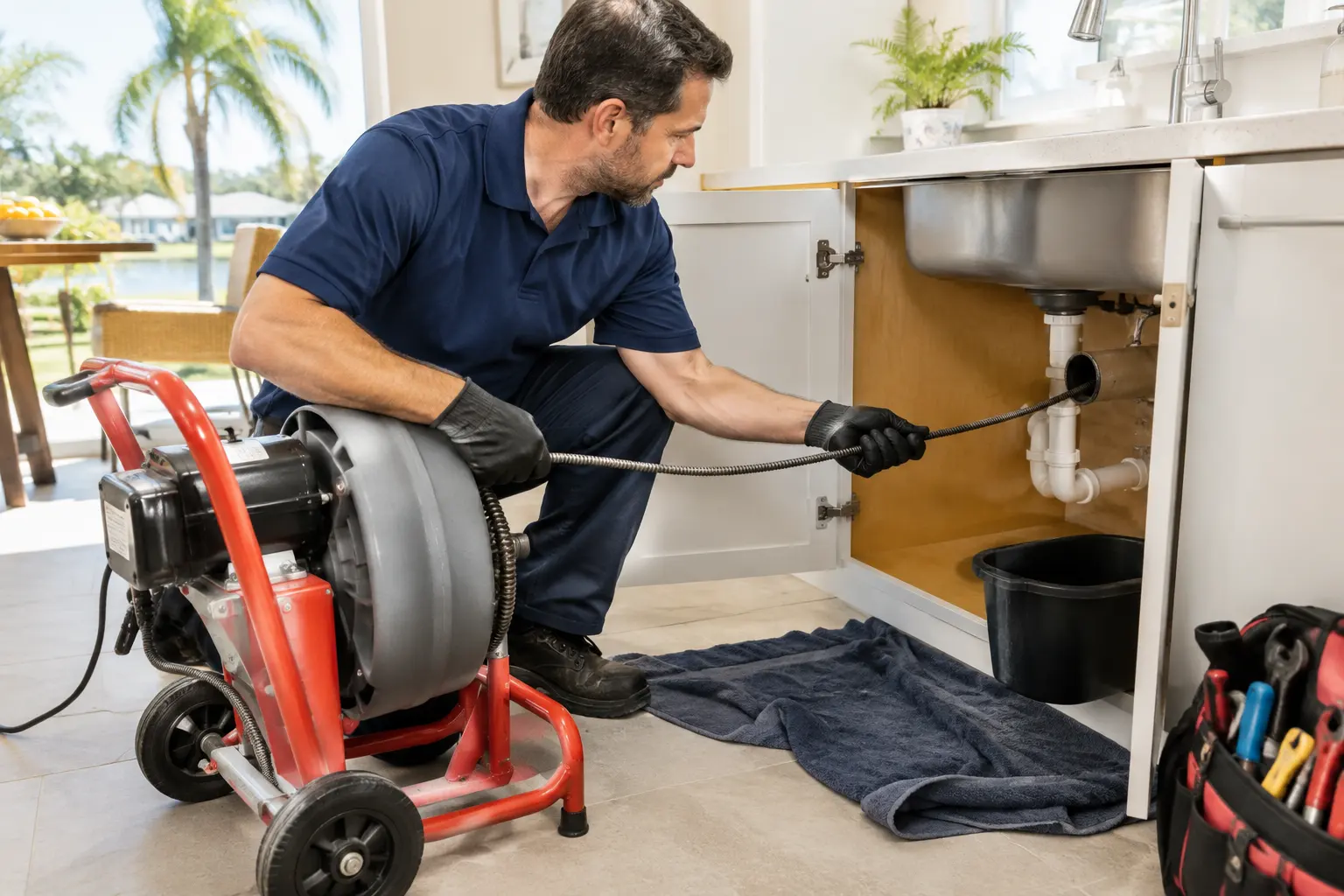
Access through a cleanout allows the line to be checked for breaks, sags, and roots.
- 3
Choose the fix
The repair approach depends on the section and condition found.
- 4
Repair and verify flow
The repair is completed and the line is tested with running water.
Questions about sewer line repair
Is a sewer backup an emergency?
Sewage in the home is a health concern. Stop running water and avoid using drains until the line is cleared.
Do tree roots always mean replacement?
No. Roots can sometimes be cleared and a damaged section repaired, depending on the pipe condition.