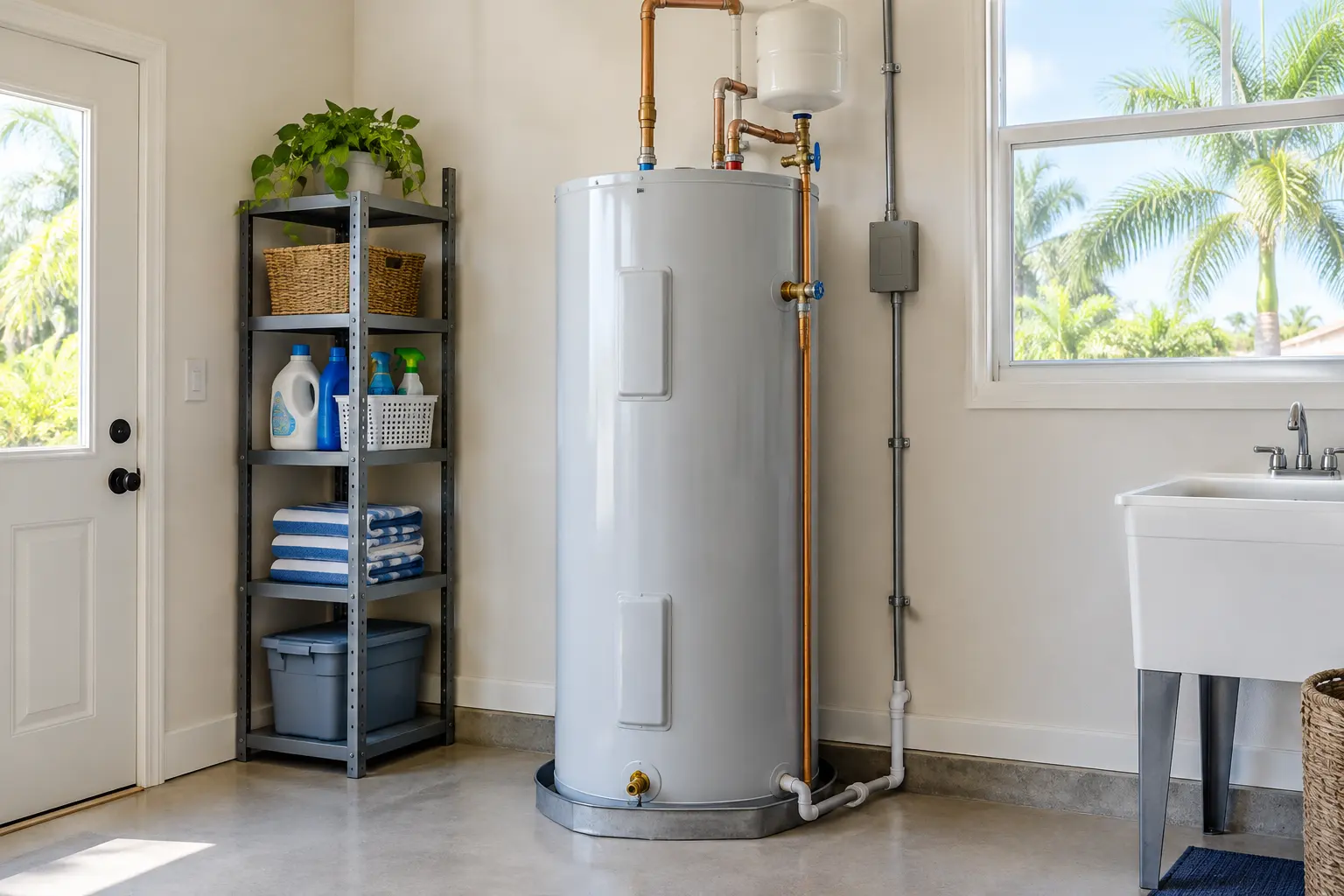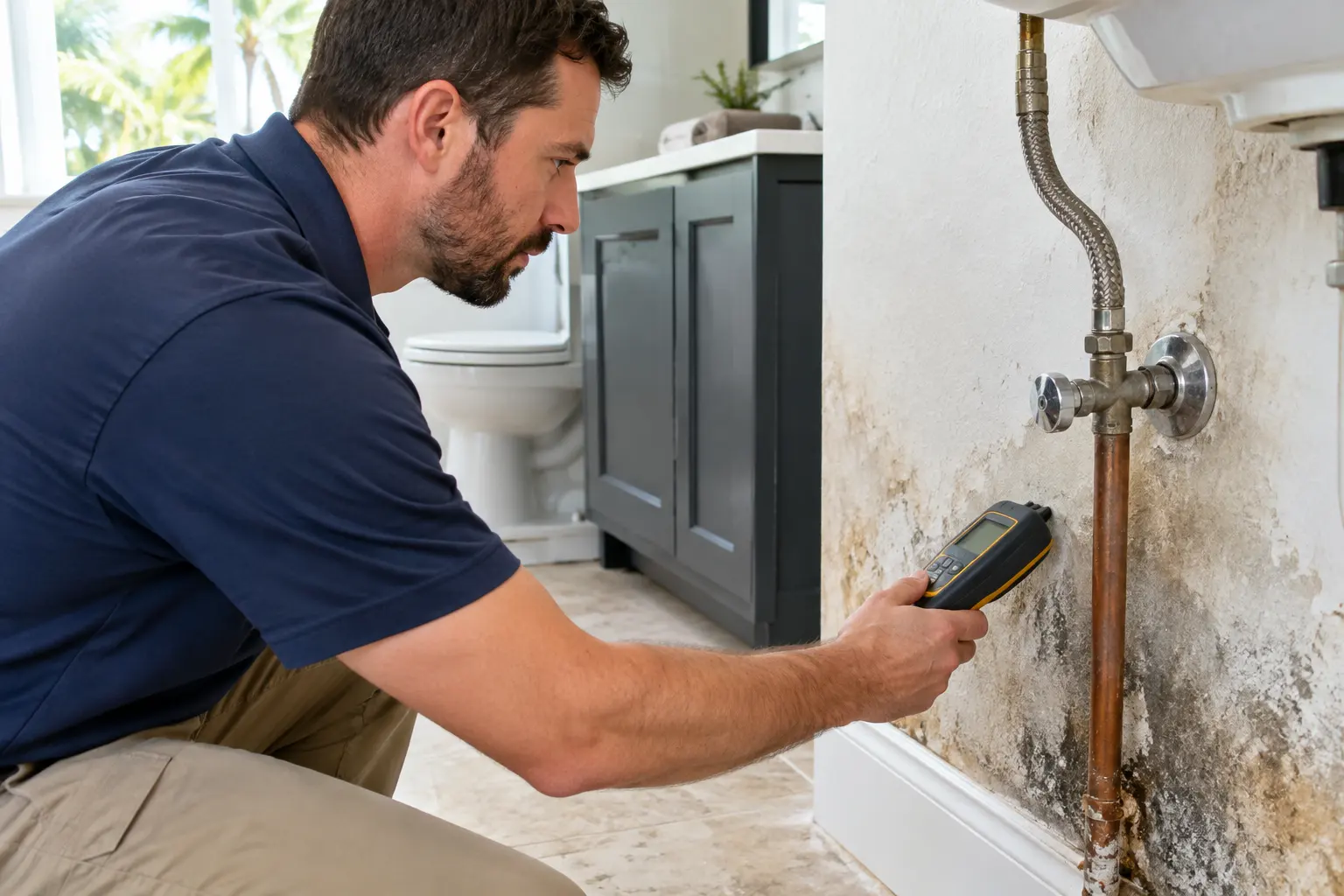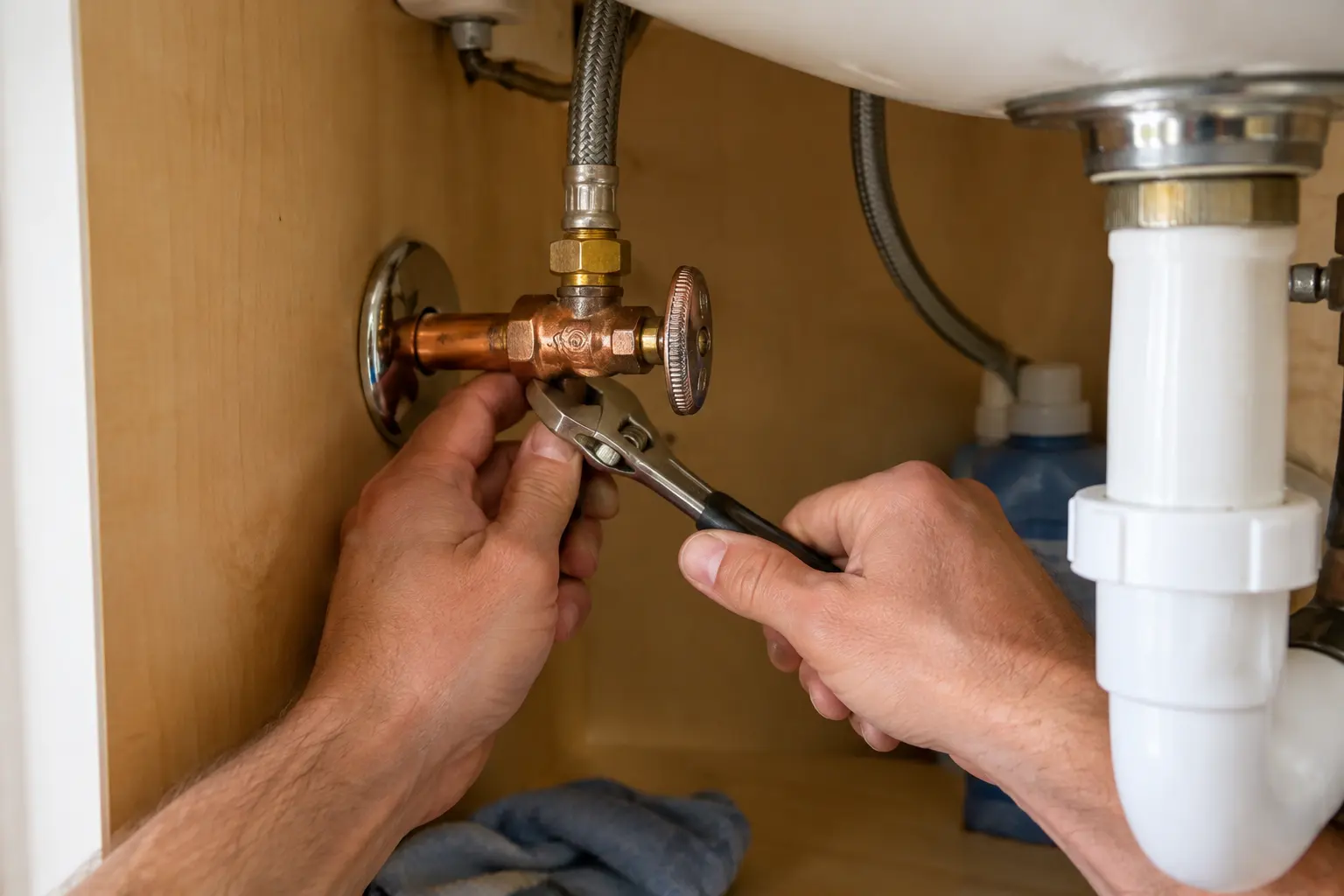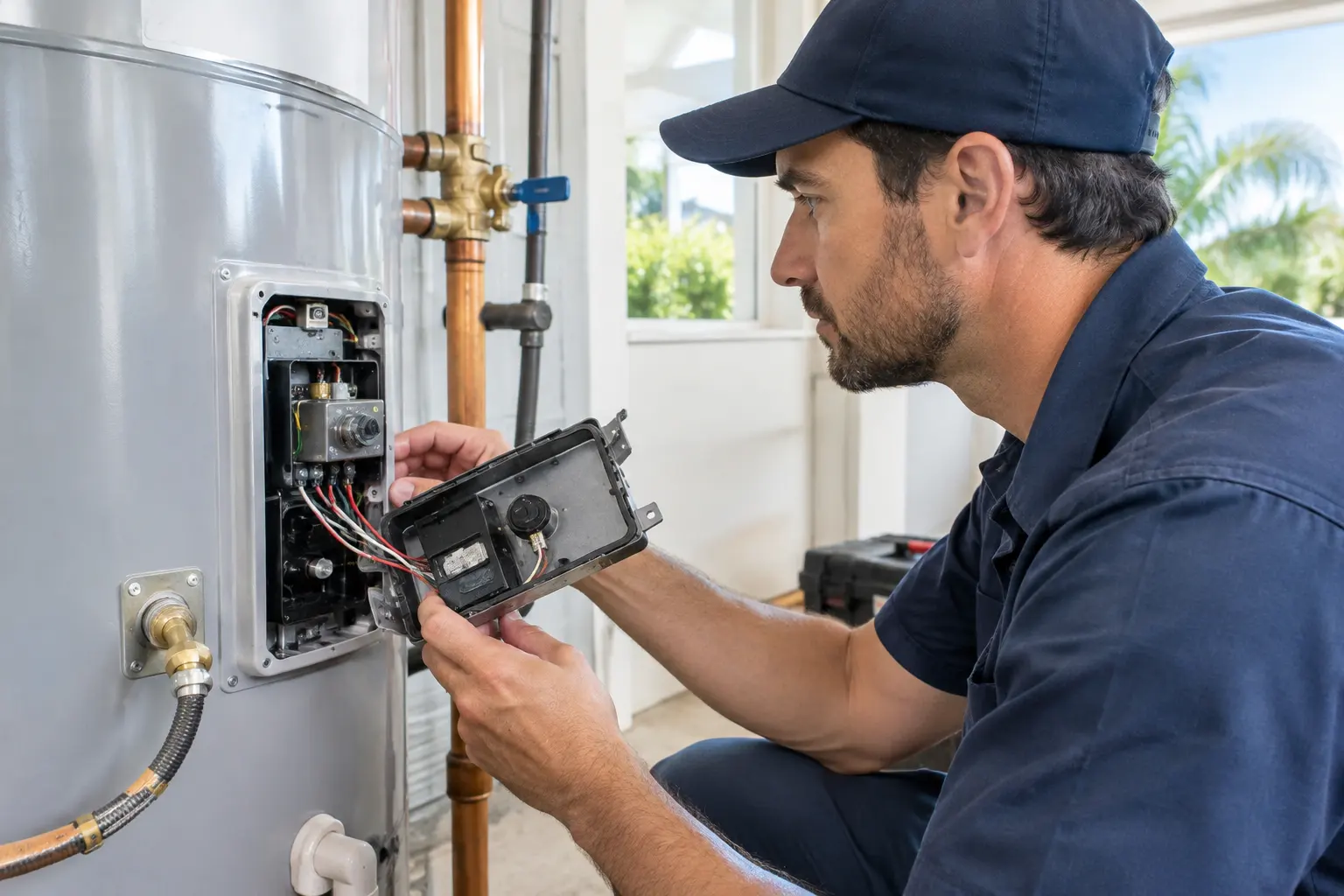
Common Reasons a Heater Stops Keeping Up
Electric heaters rely on heating elements and thermostats, and either can fail without warning. Gas heaters depend on a pilot or igniter, a gas valve, and proper venting. A tripped breaker or reset button can also be the reason, though it often signals something underneath.
Sediment is another frequent cause. Minerals settle at the bottom of the tank, insulating the water from the heat source and making the unit work longer and louder. Flushing can help when the buildup has not gone too far.
What a Repair Visit Looks At
The repair starts with confirming power or gas supply, then testing the components that control heating. On electric units that means elements and thermostats. On gas units it means the pilot, igniter, thermocouple, and gas control.
Leaking fittings, failed relief valves, and worn drain valves are also common repairs. If the tank itself is leaking, replacement is usually the realistic path.
How this kind of job usually unfolds
- 1
Tell us the symptom
Describe whether hot water is gone, weak, or inconsistent, and whether you hear noises.
- 2
Check the basics
Power, gas, breakers, and reset controls are confirmed first.
- 3
Test components
Elements, thermostats, or gas controls are tested to locate the failure.
- 4
Repair and confirm
The failed part is replaced and the heater is run until hot water returns.
Questions about water heater repair
My relief valve is dripping. Is that dangerous?
It can mean pressure or temperature is too high, or the valve is worn. Do not plug it. Mention it in your request.
Should I flush my tank?
Regular flushing helps many tanks, but a very old tank that has never been flushed should be checked first.